Math111BKK
Intro to Probability and Statistics
Faculty
Andrey Khokhlov
Chief Researcher, IEPT RAS
Course length
Duration
Total hours
Credits
Language
Course type
Fee for single course
Fee for degree students
Skills you’ll learn
Overview
Machine learning and computer modelling are powerful tools that are an important part of computer science education today. Statistics and probability are traditional mathematical theories that provide the foundations of statistical computer methods. It is useful to know both the general principles and the differences in these approaches, as both machine learning and statistical models allow you to study data structures to create practically usable predictions.
Learning highlights
- The objective of the course is to provide a foundation for further education or further self-education in probabilistic and statistical methods. The relevant theories are based on several non-obvious conventions that need to be explored in detail with concrete examples. Also, the methods contain many formal definitions, mastering which takes time and some effort. In our course, there will be a series of tasks to help you learn them.
- In summary, the goal of the course is to achieve a practical mastery of not-too-complex but demanding methods for solving real-world problems.
Course outline
15 classes
Session 1
Holidays
Session 2
Basic ideas of probabilistic l models. Frequentist and axiomatic approaches. Model ambiguity, cases of distinguishable and indistinguishable objects. Some combinatorial formulas and computational tools.
Session 3
Classical finite and non-finite models. Vocabulary of probability terms. Paradoxes and their relation to Natural Sciences.
Session 4
Symmetry arguments. Algebra of events and the corresponding mathematical theory. Probabilities in discrete and non-discrete sample spaces.
Session 5
Conditional probabilities, the independence of events and corresponding formulas. Bayesian approach for finite and infinite discrete cases.
Session 6
Different approaches to probabilities: the model of von Mises and the classical model. General discrete model and the idea of the quantum probability model. Random variable from formal and heuristic points of view.
Session 7
Random variables and distribution functions. Scalar and random vector variables and their properties. Mutual and group independence. Probabilistic models in multidimensional space.
Session 8
Intermediate test. Mathematical expectation of random variables.
Session 9
Moments and other characteristics of the random variables. Chebyshev inequalities.
Session 10
The Law of Large Numbers and what Statistics can do. Sample space, parametric and non-parametric approaches in Statistics.
Session 11
Integral-valued random variables and their generating functions. Computational techniques, analytical formulas, and computer modelling.
Session 12
Binomial distribution and its asymptotics. The idea of the Central Limit Theorem and its meaning for the Natural Sciences. An experimental illustration.
Session 13
Non-discrete and absolutely continuous random variables. Four arithmetic operations with random variables, calculations.
Session 14
Statistical tests and computer simulations. Simple and complex hypotheses.
Session 15
Final test.
Prerequisites
In the process of studying, we will need the basic skills of calculus: the ability to perform analytical transformations, integration and differentiation of simple functions, knowledge of the properties of power series–all of this is within the scope of a standard introductory course. In practical computer modelling, it will be necessary to be able to create numerical arrays and visualise their properties on graphs. For this purpose, it is quite enough to be able to build graphs with the help of the NumPy library in Python.
Methodology
Each lesson will be divided into thematic fragments, each of which necessarily includes the solution to one or two problems on the proposed topic. Homework will include variations of the problems solved during the lesson. Individual accounting implies continuous dialogue in the classroom, with students solving problems on the blackboard.
No individual assignments are assumed; all assignments are the same for everyone in order to stimulate the practical ability to explain their solution to others.
Grading
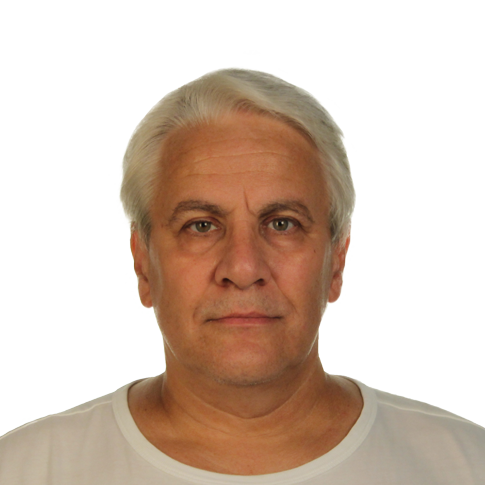
After getting his Ph.D. in Algebraic Topology in 1983 Andrey worked in several scientific and/or teaching organisations, among them are the Russian Academy of Sciences, Moscow State University, and Baumann Technology University. The Scientific advising of the graduate and thesis students was part of his activities, not only in Russia, but also in France.
Andrey’s main results in science are linked with geophysical data processing, so naturally his teaching interests are now concentrated in the applied methods of Statistics and their algorithmic implementations. He currently helps his students avoid some common errors within the probabilistic inferences and support their attempts to study Probability and Statistics theory in general.
See full profileApply for this course
Intro to Probability and Statistics
by Andrey Khokhlov
Total hours
42 Hours
Dates
Apr 16 - May 03, 2024
Fee for single course
€2999
Fee for degree students
€1999
How to secure your spot
Complete the form below to kickstart your application
Schedule your Harbour.Space interview
If successful, get ready to join us on campus
FAQ
Will I receive a certificate after completion?
Yes. Upon completion of the course, you will receive a certificate signed by the director of the program your course belonged to.
Do I need a visa?
This depends on your case. Please check with the Spanish or Thai consulate in your country of residence about visa requirements. We will do our part to provide you with the necessary documents, such as the Certificate of Enrollment.
Can I get a discount?
Yes. The easiest way to enroll in a course at a discounted price is to register for multiple courses. Registering for multiple courses will reduce the cost per individual course. Please ask the Admissions Office for more information about the other kinds of discounts we offer and what you can do to receive one.