DS404
Python for Data Scientists
Faculty
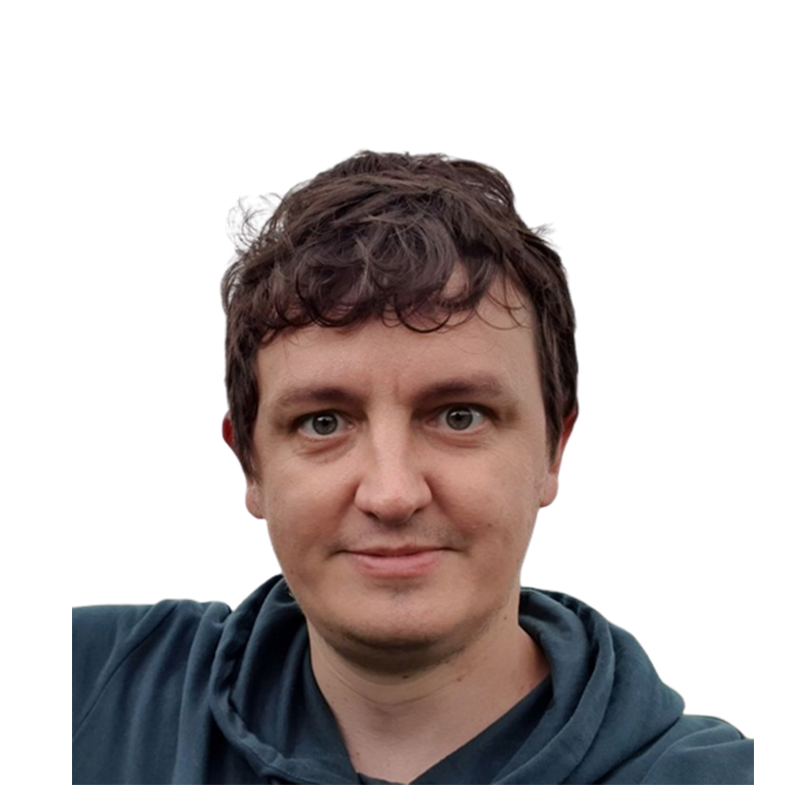
Maxim Musin
CEO at rebels.ai
Course length
Duration
Total hours
Credits
Language
Course type
Fee for single course
Fee for degree students
Skills you’ll learn
Overview
The course will cover basic python methods for data analysis: pandas, numpy, scipy, sklearn, along with advanced techniques of their application. Basic integrations of python with external libraries like xgboost, tensorflow, pytorch along with data wrangling and some hyperparameter optimization methods will be also included. Jupyter notebook usage and tricks will be also given as an organic part of the course. At the end of module, everyone is expected to be ready to come up with a simple data wrangling system.
Learning highlights
- Learning basic Python methods for data analysis.
- Use of Python’s external libraries.
- Learn how to effectively use the Jupyter notebook.
Course outline
15 classes
Session 1
Jupyter notebook intro, tricks, hotkeys, platforms.
Python methods integrated with jupyter.
Session 2
Data manipulation. Pandas. Reading .csv files, Titanic dataset. Hands-on manipulating the datasets.
Session 3
Data visualization. Matplotlib, seaborn, bokeh and plotly.
Session 4
Sklearn. Basic ML concepts: cross validation, fit/predict. Preparing prediction for Titanic dataset.
Session 5
Checking homework assignments on data manipulation and visualization. Sklearn and numpy methods.
Session 6
Data versioning. Working with enterprise data analysis systems, pitfalls and techniques.
Session 7
Weekly homework revisiting. Performing data analysis at the scale.
Session 8
Start working on general projects. Open discussion about what can, and what cannot be done with Python in seven days. Very basic custdev.
Session 9
Storing custom approximators as custom sklearn classes. Sklearn pipelines.
Session 10
Working with textual, visual and audio data in Python.
Session 11
Heavy dataset processing with Python instruments, Cython.
Session 12
Integrating via python. Google docs, chatbots, interface prototyping, data annotation, scrapping, no-code platforms
Session 13
Heavy dataset processing with Python instruments, Cython.
Session 14
Consultations on student projects.
Session 15
Finals.
Prerequisites
Knowledge of Python on the level of snakify.org is highly recommended.
General interest in statistics and data analysis is also a plus.
Methodology
We will study a set of practical jupyter notebooks, interrupted with relatively short theoretical parts. There will be two big homework assignments designed to emulate a relatively real data science project. There will also be personal projects based on Python integrations and capabilities of data analysis - this will be a good example of time management in a DS project. Also, there will be a final exam and student project demonstration at the end of the course.
Grading
Maxim Musin comes from a background in statistics, advanced multidimensional probability, and random processes. During his career in these fields, he found himself developing skills and gathering experience through working in both academic environments and the private sector. For the last 5 years Maxim is a CEO of for profit AI development laboratory rebels.ai, integrating AI in enterprise and helping startups reach the orbit.
His academic experience ranges from teaching probability and statistics at MSU and MIPT, as a member of the faculty of innovation and high technology, FIHT, which at the time was among the few places worldwide with capabilities for advanced statistics study. During his time there, he produced several notable projects with his students, particularly in regards to the stochastic convergence of neural networks. His course on applied modern statistics became mandatory for the data analysis division of the FIHT MIPT Masters.
See full profileApply for this course
Python for Data Scientists
by Maxim Musin
Total hours
45 Hours
Dates
Nov 28 - Dec 16, 2022
Fee for single course
€1500
Fee for degree students
€750
How to secure your spot
Complete the form below to kickstart your application
Schedule your Harbour.Space interview
If successful, get ready to join us on campus
FAQ
Will I receive a certificate after completion?
Yes. Upon completion of the course, you will receive a certificate signed by the director of the program your course belonged to.
Do I need a visa?
This depends on your case. Please check with the Spanish or Thai consulate in your country of residence about visa requirements. We will do our part to provide you with the necessary documents, such as the Certificate of Enrollment.
Can I get a discount?
Yes. The easiest way to enroll in a course at a discounted price is to register for multiple courses. Registering for multiple courses will reduce the cost per individual course. Please ask the Admissions Office for more information about the other kinds of discounts we offer and what you can do to receive one.