Math102
Calculus 1

Faculty
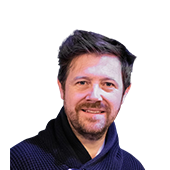
Andrey Gavrilyuk
Team Leader of the HSE Team
Course length
Duration
Total hours
Credits
Language
Course type
Fee for single course
Fee for degree students
Skills you’ll learn
Overview
Calculus is mainly a discipline about the qualitative analysis of quantitative values. Essentially, the purpose of calculus is to give the most complete description of a value behaviour through the study of its conceptual features, such as more or less, increasing or decreasing, convex, continuous, and others. Additionally, another purpose would be to make a good prediction of the value's further behaviour relative to its current state, previous behaviour, and the behaviour of other important values.
Historically, calculus is understood as a union of differential calculus and integral calculus. However, such a division is not complete, and at the moment, calculus includes many new, both elementary and more advanced, methods for analysing quantities.
Learning highlights
- In the course Calculus 1, students will study the key approaches to comparing values, from elementary methods (inequalities) to advanced ones (first and second derivatives, integral estimates). The main focus of the course is on the basic concepts of calculus such as limits, derivatives, and integrals. Also, attention will be paid to the method of asymptotic estimates, which is widely used in such areas as programming, number theory, and combinatorics.
Course outline
15 classes
Session 1
Introduction to calculus. Examples and counterexamples.
Session 2
Axiomatic approach in inequalities.
Session 3
Asymptotical inequalities and method of mathematical induction.
Session 4
Limit of a sequence.
Session 5
Some more methods for finding a limit.
Session 6
Functional equations and intuitive continuity.
Session 7
Limit of a function, O, o notation.
Session 8
Polynomials, interpolation, discrete derivative.
Session 9
Some new methods for computing derivatives, geometric interpretation.
Session 10
Midterm
Session 11
Integral estimations, advanced methods in inequalities.
Session 12
Some new methods of integration.
Session 13
Definite integrals
Session 14
Recap, Q&A
Session 15
Final test
Prerequisites
Mathematical logic (basic), inference theory (basic), set theory (basic).
Methodology
The course is practice-oriented; each class will be supplied with a list of relevant problems for solving in class, discussing and further completing as a home task. Each topic will be accompanied by theoretical blocks, discussions, and personal or group in-class solution presentation sessions. The remaining part of a day’s task that was not presented in class becomes a task for self-preparation. Several ongoing, more technical tasks not synchronised with the current in-class topics will be provided for deeper acquaintance with the core concepts of the course.
Grading
Awards
- Winner of the 46th International Mathematical Olympiad (IMO),Merida, Mexico
Teacher, trainer, scholar and entrepreneur in education with almost 20 years of experience in 'big math'.
Taught the full range of students from 10 to 65 years old, from having zero background in math to the winners of respectful international competitions. Made his PhD thesis in collaboration in Russia, Canada and Switzerland and came back to Russia to launch his courses on mathematics for adults (after grad people).
See full profileApply for this course
Calculus 1
by Andrey Gavrilyuk
Total hours
45 Hours
Dates
Oct 16 - Nov 03, 2023
Fee for single course
€1500
Fee for degree students
€750
Explore related courses


How to secure your spot
Complete the form below to kickstart your application
Schedule your Harbour.Space interview
If successful, get ready to join us on campus
FAQ
Will I receive a certificate after completion?
Yes. Upon completion of the course, you will receive a certificate signed by the director of the program your course belonged to.
Do I need a visa?
This depends on your case. Please check with the Spanish or Thai consulate in your country of residence about visa requirements. We will do our part to provide you with the necessary documents, such as the Certificate of Enrollment.
Can I get a discount?
Yes. The easiest way to enroll in a course at a discounted price is to register for multiple courses. Registering for multiple courses will reduce the cost per individual course. Please ask the Admissions Office for more information about the other kinds of discounts we offer and what you can do to receive one.